

Follow us:

IG LI FB
By Danica D'Souza

SOME OF THE STORIES SHAPING OUR LIVES BEGAN LONG BEFORE WE WERE BORN.

S

he had always believed she was simply unlucky in love. Every relationship began differently, yet somehow ended in the same place: with her waiting for a man who had become emotionally unreachable.

The faces changed. The circumstances changed. But the silence was always familiar. 

She had spent  years trying to understand herself. She had examined her childhood, questioned her choices and learned the language of attachment. She knew why she feared abandonment, or at least she thought she did. Yet insight had not interrupted the pattern. Somewhere between understanding the wound and living through it again, something remained untouched. 

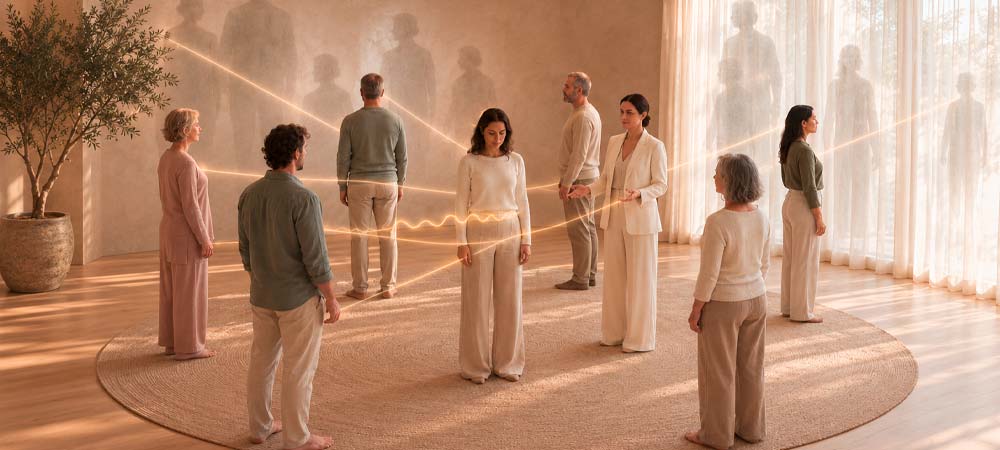
Then, during a Family Constellations session, she found herself standing before a story that did not appear to belong to her. 

Behind her was her mother.

Behind her mother, a grandmother whose husband had left without explanation and never returned. 

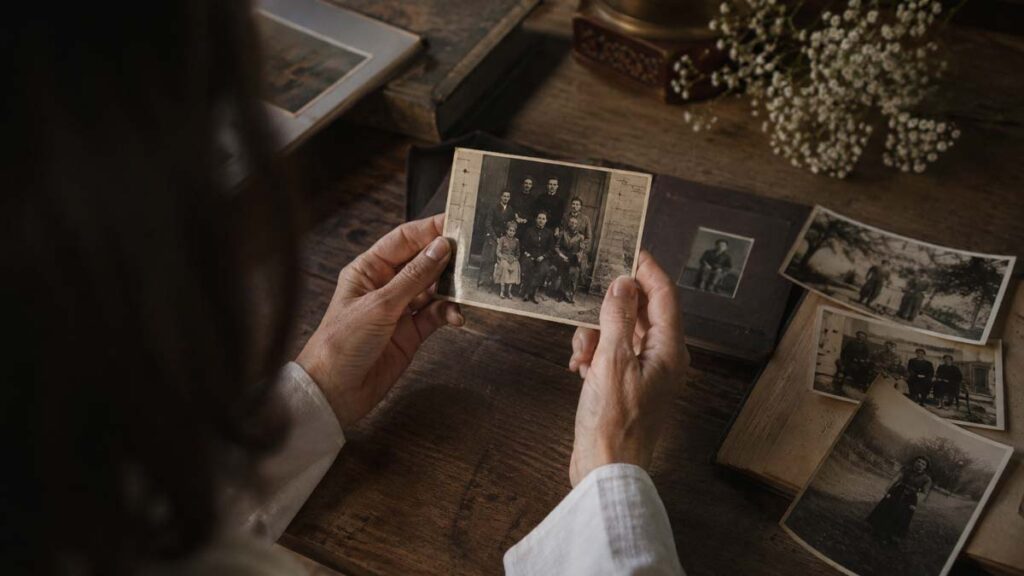
No one in  the family spoke about him. His absence has hardened into silence; his wife’s grief had become endurance, and her endurance had been remembered as strength. But what could not be spoken had not disappeared. It had travelled quietly through the woman of the family, through the partners they chose, the departures they endured and the love for which they continued to wait.

For the first time, the woman wondered whether she had been repeating a story rather than merely making the wrong choices.

Not because she consciously wished to suffer as her grandmother had suffered, but because somewhere within the invisible architecture of belonging, love had become entangled with loyalty. To live differently could feel, at an unconscious level, like leaving the women who came before her behind. 

So, what if she was not waiting only for the men she had loved? What if she was also completing an unfinished wait that had begun generations before her?
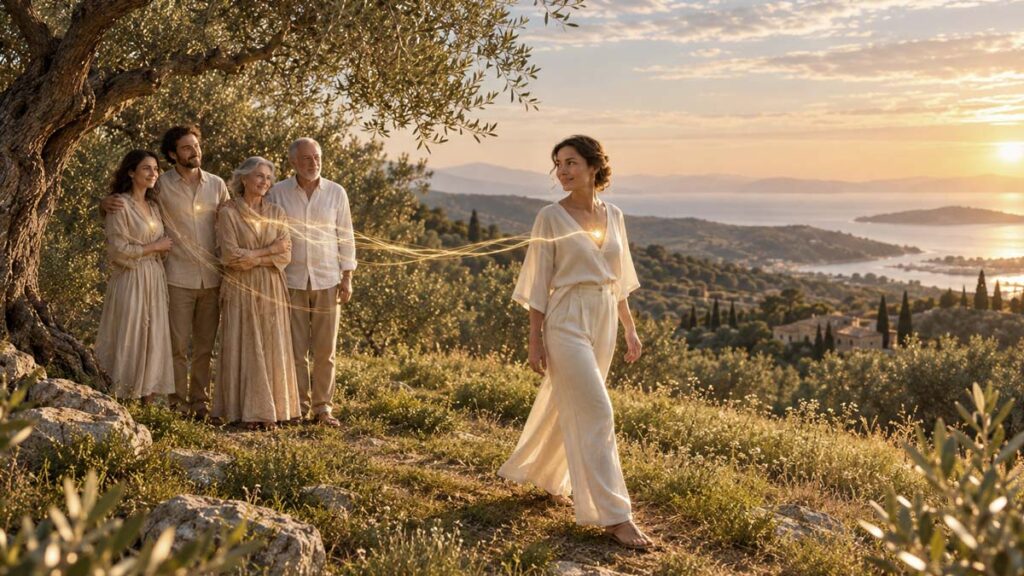
In Family Constellations we see that love does not always express itself as tenderness. It sometimes expresses itself as repetition. 

A child may unconsciously remain loyal to a parent’s suffering. A daughter may make herself smaller because surpassing her mother feels like abandonment. A son may carry anger that once protected his father. A later generation may repeat a loss because what was excluded from the family still seeks acknowledgement.

This is not a conscious imitation. It is belonging in its most innocent and complicated form: If this was your fate, perhaps I must carry part of it to remain close to you.


THE PRICE OF BELONGING

Another client came to me because success repeatedly slipped away from him.

He worked hard, created opportunities and moved close to the life he wanted. Yet whenever recognition or financial stability appeared, he found a reason to withdraw. He called it bad timing. Sometimes he blamed exhaustion. At other times, he became convinced that the opportunity was not right. 

Behind this pattern was a family history marked by displacement and financial loss. The people before him had survived by expecting less, attracting little attention and never trusting that security would last. 

For them, Visibility had once carried danger. 

His circumstances were different, but his nervous system still seemed loyal to an older world. He desired success consciously while retreating from it physiologically.

But, What if he was not afraid of failure? What if he was afraid that succeeding would separate him from those whose lives had been defined by survival? 

The beliefs we cling to can provide a kind of safety. It gives suffering an explanation. It allows the world to remain familiar. If we surrender the narrative, we must also confront our freedom and the responsibility of choosing differently.

Therapy can help us recognise the room in which we have been living. But no amount of insight can carry us through the door if we refuse to take a step. 

Healing is not passive optimism. It asks something of us.

It may ask us to stop waiting. To accept the opportunity. To speak where the family remained silent. To leave what is familiar but harmful. To tolerate the guilt of becoming happier than those we love. 

A DIFFERENT KIND OF INHERITANCE

Family Constellations does not erase what happened. It does not promise a life untouched by grief, nor does it offer certainty about every origin of pain. 

What it can offer is another way of seeing. 

Perhaps the fear is not weakness but an old protection.

Perhaps the guilt is not proof that we are doing something wrong but evidence that we are stepping beyond an inherited boundary. 

Perhaps the pattern is not a punishment but a forgotten expression of love. 

And perhaps freedom does not require us to reject our families. Perhaps it asks us to love them without becoming the continuation of everything they suffered. 

Every client leaves my room with a question. 

What if the abandonment was not evidence that I was unlovable?

What if my body was protecting me from a danger that no longer exists?

What if choosing happiness does not betray my mother?

What if I can remember them without repeating them?

What if the story did not begin with me, but it could change through me?

Life will continue to surprise us with chapters we believed we had already understood. Healing does not make us immune to the part. It allows us to meet the past with greater consciousness when it returns.

Every new story can grow only as far as the heart has learned to hold it.

Perhaps that is what transformation truly is: not becoming someone untouched by what came before, but becoming spacious enough to honour the old story without allowing it to write the ending.

TOP

INAUGURAL EDITION
ISSUE 01 · 2026
THE RETURN OF ANCIENT INTELLIGENCE
SCIENCE · CONSCIOUSNESS · WELLBEING
UAE-BASED · GLOBAL PERSPECTIVE
PRINT · DIGITAL · SOCIAL